Helping project teams measure carbon, reduce environmental impact and embed circular thinking across the life of an asset.
Carbon reporting in the built environment is quickly moving from optional to expected, and in some cases, required. We’ve already seen this shift through Green Star, where upfront carbon assessment has become a mandatory requirement. NABERS Embodied Carbon is creating greater consistency around how emissions are measured, while the industry continues to move towards more formal carbon reporting requirements.
At the same time, the conversation is getting bigger. The industry is moving beyond operational carbon to look more closely at the carbon locked into materials and construction, whole-of-life impacts, and what happens to buildings and materials at the end of their useful life.
For developers, designers and project teams, this means carbon and circularity need to be understood much earlier in the project. That’s why E-LAB is launching our new Circularity & Carbon offering.
Bringing together Life Cycle Analysis, carbon measurement and circular economy thinking, the new offering helps project teams understand their environmental impact, respond to growing reporting requirements and make better-informed decisions from the outset.
Carbon data matters. But data alone doesn’t tell you what to do next.
Our approach combines Life Cycle Analysis with practical consulting to help project teams understand the environmental impact of different options, compare them transparently and use those insights to make better decisions.
We can assess impacts across materials, manufacturing, transport and construction, while increasingly considering what happens throughout the asset’s life through replacement, repair, reuse and eventual end-of-life.
The goal isn’t simply to calculate carbon. It’s to use the numbers to find a better way forward.
Circularity takes that thinking further.
Instead of the traditional take, make, waste model, a circular approach asks a different set of questions. Can we retain more of what already exists? Can materials be reused? Can an asset adapt over time? Can components eventually be disassembled, repaired or recycled rather than discarded?
These decisions have the greatest potential when they’re considered early. E-LAB works with project teams to explore opportunities across reuse, adaptability, durability, maintainability, disassembly, repair, recycling, material reduction and traceability.
It’s about thinking beyond practical completion and considering the future of an asset from the beginning.
We’ve seen what this approach can achieve.
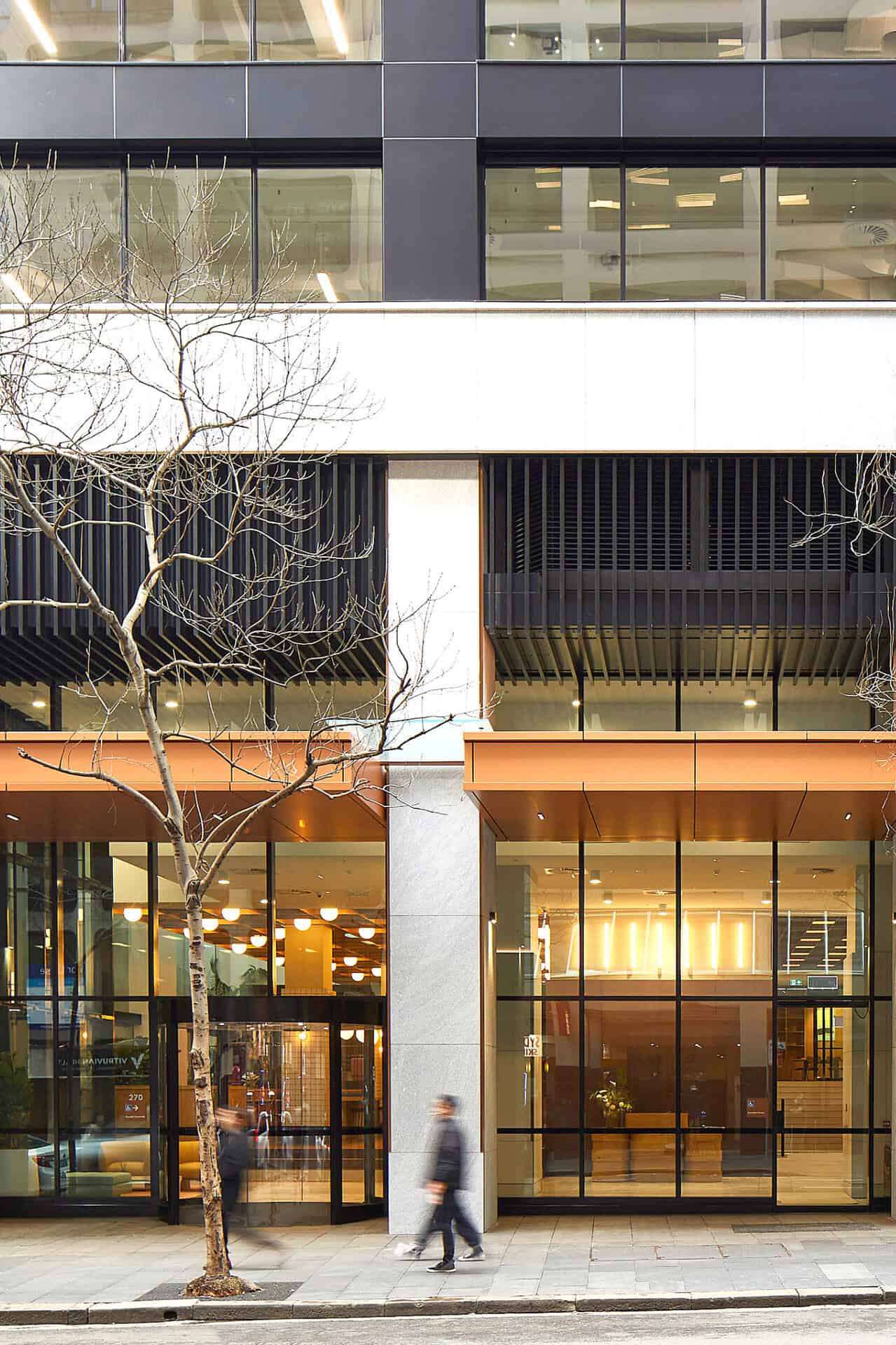
At 270 Pitt Street, significant retention of the existing structure and façade contributed to a 74% reduction in upfront carbon emissions and a 36% reduction in whole-of-life impacts, supporting the project in achieving a 6 Star Green Star Buildings certification.
At Monash Student Living, a CLT hybrid structure demonstrated a 24% reduction in upfront carbon.
And across current fitout projects, we’re working with design teams to assess reuse opportunities alongside upfront carbon and Circular Transition Indicator measurements.
The opportunity now is to bring this thinking into more projects, earlier.
The built environment accounts for approximately 50% of raw material extraction, 40% of waste and 40% of global carbon emissions.
Changing those numbers will take more than reporting. It requires project teams to understand the impact of their choices and challenge the assumption that the way we’ve always designed, procured, built and disposed of materials is the way we need to keep doing it.
Circularity & Carbon brings that thinking into the project conversation through our Sustainability expertise.
Measure what matters. Understand what it means. Then find the better way forward.
If carbon and circularity are becoming part of the conversation on your upcoming projects, talk to our team about how we can help you understand the requirements, identify opportunities early and find the best way forward.